Good little meter but too many unused extras
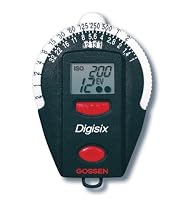
The digisix meter is advertised as a "five-in-one" device but truthfully speaking I've only ever found it useful as a light meter. Besides the meter it has a countdown timer that you can set to whatever length of time you want after which it starts to beep incessantly in a high pitched electronic chirp; it has a clock; it has an alarm for the clock; and it has a temperature thermometer. I've never really used the temperature thermometer although it's there whenever I end up pushing the mode button by mistake and have to cycle through all of the other modes to get back to the light metering mode. That's another thing that's wrong with this meter besides having all these extra "modes" that I never use if the meter is the only mode that you want to use then accidentally pushing the mode button makes you have to push the mode button four more times to cycle it back into light metering mode.
As a light meter this Gossen is nice little gem. It's small (just about the size of a well-sized skipping stone) it's light (made almost entirely of flat black matte plastic on the outside and not the cheap kind) it's got a sliding incident reading bulb (for taking incident reading light measurements or in other words readings from the subject to where the camera is going to be) a digital readout (it's a digital light meter after all or in other words with one push of the metering button it will display its light reading almost instantly) and an analog reading wheel (or in other words a dial that you can turn that will simultaneously show all the readings for all the aperture settings and shutter speeds that are available for that current reading for that current film speed that you're using). As a light meter by itself I've found this meter to be very accurate for exposing normal everyday black & white and color negative film. I'm not exactly sure how accurate it would be for slide films (which have less exposure latitude than negative films and are more sensitive to small variations in exposure).
Now some caveats for this meter. The analog dial only runs from 4 minutes down to 1/2000 seconds but that won't stop you from etching in your own readings on the edge of the dial if your camera can go longer than 4 minutes or shorter than 1/2000 seconds (it is a simple geometric scale in other words a doubling or a halving of the speed of the shutter to let double or half the amount of light through the camera and onto the film; it's not like the wheel stops turning just because it gets to the end of the numbers Note: the wheel turns all the way around).
Another caveat is that it is a multiple step process to change the ISO Speed reading of the film that you are metering for with this meter so if you're changing filmspeeds very often using this meter is going to be a pain in the behind. If you only use one speed of film or if you're not going to change it very often then the multiple step process to change the film speed shouldn't be too much of problem but it will be a caveat.
A third caveat is that the way this meter works is you take your light reading with it and then dial into the analog wheel the number that it gives you in its display. The analog wheel in other words is split into three layers: the outside layer has all of the shutter speeds on it the middle layer is etched into the meter itself and has all of the aperture sizes on it the inside layer is visible through a little magnifying bubble at the "twelve o'clock" portion of the meter and in it is displayed the "EV" numbers which correspond the actual number that the meter itself digitally displays after you press the reading button when taking a reading of a scene. Now this may seem kludgy at first but in actuality it combines the best of both the worlds of digital and analog light meters (and by the way is the only meter I've found that does this). In other words it combines the analog physical wheels (that Gossen is famous for) with the speed of the digital meter.
I like it if you haven't noticed but this little meter really doesn't need all of the extra modes that Gossen put into it as it slows down the operation of the meter on occasion and they're never really used. If you ask me where they could improve it I would say make it solely a light meter make it easier to quickly change the ISO speed of the film for the readings (maybe even include the ISO speed on a fourth layer on the wheels as by the way it is done on Gossen's normal analog wheel meters). Combine the wheels of the old with the fast digital readout of the new and you've got yourself a bonified five star light meter but cluttered as it is now although the meter itself is accurate and quick and easy to use I'll have to say that in the end it's only really worth four stars.More detail ...
under-rated!!
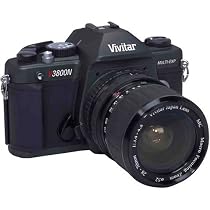
this camera is really under-rated. i bought this camera on a hunch and am so glad i did. when i saw the results of my first roll of film i was so impressed. i was considering buying the v4000 but i wanted something no one else had. this camera has some features that the v4000 doesn't have. why the v4000 is priced more than the v3800n? i will never know. this camera has a depth of field preview and a self timer. also if the batteries run out the camera still works. (batteries only control light metering) also this camera has multi exp. button which really helpsand a metering button when working with aperture. the only negatives i can find is the lack of info that is provided in the instruction manual. but if you know cameras or have other means to find out how to work this "bad boy" then this is the camera for you! the lens that comes with the camera is fairly decent. good for starting you off. it has a 1:4 macro setting which gets you started working with macro. maximum aperture is 3.4. not very big but like i said a starter. all around my favorite!
More detail ...
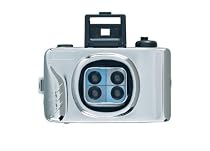
A fun "toy" for photography enthusiastsI bought a Lomo Action Sampler for a college class several years ago and quickly became hooked. Simply stated this is a fun photography "toy'" suitable for every age and skill level. I enjoy using non-digital cameras and this one produces some unique and beautiful images. There is no flash so using the camera in bright daylight works best but I have been able to create some great images in "less than ideal" conditions by using different types of film.
My only complaint is that it's a bit too easy to accidentally expose the film because of the ease of opening the camera body. However a piece of tape placed over the open button does the trick!
More detail ...
An Honest Review About An Honest And Faithful Workhorse-the Nikon FM10!
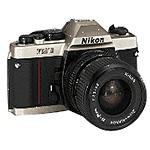
I really hope that this short review is of some help to those who are out there searching for a nice and affordable camera to buy. There are so many to choose from and so many different ways especially with shopping via the Internet to purchase cameras that it helps to have someone help out. You'll find that the Nikon FM-10 is lightweight but as durable as some cameras that are much more expensive.
I am an avid photographer and I love two brands of cameras Canon and Nikon. The Nikon FM10 is a durable and dependable 35mm film camera. The kit comes complete with everything you will need to begin your new photographic adventure. My only concern for people that are not VERY familiar with cameras is that you might now realize that this model is not automatic like the newer versions. If you have the time to spend focusing your subject-then this is a camera that will perform consistently for you. If you are brand new to photography and would like for your camera to do all of the focusing and other adjustments you're likely better off at least reviewing the newer versions of this SAME camera.
I have used this camera over and over and over again. In all honesty it's as good a camera as any at this level. The photos are always crisp and predictable and the body of the camera has held up well for over 7 years. I've found myself taking photographs and then the rain would come and soak myself and the camera. Even without proper water protection the camera has not shown any problems or any sign of rusting.
You'll find it easy to load your film and quite easy to get used to taking great pictures. The lens that is included with the Camera Kit is a very good one and will serve most of your needs. There is a great array of additional lenses and other products that you can buy to add to you Nikon FM10.
The camera was launched to the public as the Nikon FM-10 in 1995. A magazine that I like to read Popular Photography felt that Nikon could have done a bit better with this camera outfit-but that was ONLY their opinion. But In 1996 an automatic version of the lightweight FM10 the Nikon FE-10 was also being introduced as a continuation model to the discontinued Nikon FE-2. The FE-2 was retired in 1986. For many Nikon fans mixed feelings were abundant about the original launch of the NIKON FM-10. But few could argue that the general mechanics of the camera are good to outstanding.
Take your time in researching the right camera for you. I think that this would be a great camera for students who are taking an introductory photography class. With Automatic-Everything Cameras it's too easy to swith to "AUTO" when you're learning how to take photographs in a class. The Nikon FM10 would allow the new student to "focus" on the true and important elements of photography that are extremely helpful to an aspiring photographer.
I hope this was helpful at least in part. It was a pleasure to share information with you and I'd be happy to entertain questions about anything that I've missed in this review.
Happy Picture Taking!
Peter Cannice
Scottsdale Arizona
More detail ...